
Billing Confusion
Each vendor has separate POS. Customers pay multiple times. Token systems are manual. Lines back up across counters.
Your food court serves variety, but does your system create chaos?
Food courts demand coordination across multiple vendors, cuisines, and order flows. Your operations system should bring order to this complexity. Unify vendor operations, centralized billing, revenue allocation, and customer management under one food court-optimized ERP.


Trusted by restaurant operators across India
Fragmented vendor operations don't just create inefficiency. They destroy customer experience and profitability visibility.
Each vendor has separate POS. Customers pay multiple times. Token systems are manual. Lines back up across counters.
No coordination between vendors. Order readiness is mismatched. Customers wait with incomplete meals from different counters.
Mall revenue share is calculated manually. Vendor-wise performance is unclear. High performers subsidizing weak vendors stays unknown.
Long waits, multiple payment points, and no unified ordering experience. Ratings suffer and footfall drops.

Built for variety but operating with vendor silos. Multiple cuisines under one roof but no operational cohesion. Growth potential massive but execution fragmented.
Each vendor buying own POS, paying separate software fees, managing own payment terminals—8x cost when 1x would suffice.
Manual revenue tracking leads to underreporting and disputes. 3-5% revenue leakage common due to tracking gaps.
No performance benchmarking across vendors. Weak performers not identified until too late. Prime counter space wasted.
No unified loyalty program. Customers can't order from multiple vendors on one bill. Tech-savvy customers avoid food courts for standalone restaurants with better digital experience.
Food courts lose ₹3-7 lakhs monthly per 8-vendor setup through duplicate technology costs, revenue tracking inefficiency, unoptimized vendor mix, and dated customer experience. Well-managed food courts achieve 6-9% net margins vs 3-5% for standalone restaurants when systems work correctly.
Unified enough to coordinate all vendors. Flexible enough to preserve brand independence. Designed to transform food court chaos into orchestrated efficiency.
One payment, multiple vendors—customer convenience without vendor disruption
Customers get complete meals at once, not piecemeal across 20 minutes
Vendor-wise sales tracking with hourly, daily, weekly, and monthly views. Automated revenue sharing calculation based on configurable formulas. Real-time settlement visibility for both food court and vendors. Performance benchmarking across vendors by cuisine and location. Footfall-to-conversion analysis showing vendor efficiency.
Outcome:
Know which vendors drive value and which waste premium counter space
Reduce costs through collective buying power while maintaining vendor autonomy
Build food court loyalty, not just vendor loyalty—retain customers to location
Seamless collaboration between food court operators and mall management
Real-time queue visibility and wait time estimates. Peak hour management with order throttling recommendations. Seating availability tracking and table turnover monitoring. Rush hour staffing alerts for vendors. Customer flow analytics for layout optimization.
Outcome:
Maximize throughput during peak hours without compromising service quality
Complete financial visibility from individual vendor to food court portfolio
Here's a 10-point comparison showing why RanceLab ERP is engineered for food court success.
Each vendor separate billing—customers pay multiple times
Unified billing with multi-vendor cart and single payment
No kitchen coordination—orders complete at different times
Centralized Kitchen Display with order synchronization
Manual revenue tracking with disputes and delays
Automated revenue sharing with real-time settlement visibility
Duplicate technology costs across all vendors
Single platform serving all vendors at fraction of individual costs
No vendor performance visibility—flying blind on tenant mix
Comprehensive vendor benchmarking with footfall-to-conversion analytics
Fragmented customer data—each vendor owns small sliver
Unified customer database with food court-wide loyalty program
No queue management—peak hour chaos
Intelligent queue management with wait time visibility and flow optimization
Manual mall reporting—end-of-month reconciliation headaches
One-click automated reporting for mall management and audits
No procurement synergy—each vendor negotiates alone
Optional bulk procurement coordination for cost savings
Limited customer experience—dated token systems
Modern QR ordering, digital tokens, SMS notifications, table service
Each vendor separate billing—customers pay multiple times
Unified billing with multi-vendor cart and single payment
No kitchen coordination—orders complete at different times
Centralized Kitchen Display with order synchronization
Manual revenue tracking with disputes and delays
Automated revenue sharing with real-time settlement visibility
Duplicate technology costs across all vendors
Single platform serving all vendors at fraction of individual costs
No vendor performance visibility—flying blind on tenant mix
Comprehensive vendor benchmarking with footfall-to-conversion analytics
Fragmented customer data—each vendor owns small sliver
Unified customer database with food court-wide loyalty program
No queue management—peak hour chaos
Intelligent queue management with wait time visibility and flow optimization
Manual mall reporting—end-of-month reconciliation headaches
One-click automated reporting for mall management and audits
No procurement synergy—each vendor negotiates alone
Optional bulk procurement coordination for cost savings
Limited customer experience—dated token systems
Modern QR ordering, digital tokens, SMS notifications, table service
Results achieved within 90 days of implementation
Customer satisfaction scores increased by 41%—unified ordering and payment eliminated frustration
Take a quick quiz to find the perfect solution for your needs, or speak with our team for personalised guidance.
This is how operations transform with RanceLab ERP.
Before opening, the central dashboard displays yesterday's performance: vendor-wise sales, customer footfall patterns, peak hour timings, and average wait times. System highlights which vendors drove traffic and which underperformed.
Each vendor's kitchen sees their prep requirements based on day-of-week patterns. High-traffic vendors get early alerts to prep more inventory. Slow days suggest reduced prep to minimize waste. Coordination starts before first customer arrives.
Start with data, not guesswork—optimize prep and staffing across all vendors.
12:30 PM—lunch rush begins. Customer scans QR code at central kiosk, browses all vendor menus on one screen. Adds biryani from Indian vendor, spring rolls from Chinese vendor, pizza from Italian counter. Single payment. Three digital tokens issued.
Kitchen Display Systems at all three vendors receive orders simultaneously. System calculates synchronized completion—biryani ready in 8 minutes, spring rolls in 6 minutes, pizza in 10 minutes. Chinese vendor holds completed spring rolls in warmer. All three items ready together at 12:40 PM. Single SMS notification. Customer collects complete meal.
Queue monitoring shows 15-minute wait at Indian counter, 3 minutes at sandwich counter. Digital displays update customers. No surprises, no frustration.
Serve 200+ customers per hour with coordinated fulfillment, not fragmented chaos.
3:00 PM—afternoon lull. Dashboard shows morning's economics: total revenue ₹1,42,000 across 8 vendors. Indian vendor drove 32% of revenue, Chinese 24%, pizza 18%, others combined 26%. Mall revenue share auto-calculated: ₹14,200 at 10% of gross sales.
Vendor performance comparison reveals sandwich counter had lowest footfall-to-conversion rate—only 34% vs food court average 68%. Investigation needed. Perhaps menu pricing too high or variety too limited. Data enables action.
Identify performance gaps during day, not during quarterly reviews.
Food court loyalty program shows 847 active members. System identifies 124 customers who visited weekly for past month but haven't returned in 18 days. Automated WhatsApp campaign triggers: "We miss you! Here's ₹100 food court credit valid across any vendor."
Another segment: customers who only order from one vendor repeatedly. Targeted offer: "Try something new! 20% off when you order from 2+ vendors in one visit." Cross-vendor engagement drives discovery and increases average order value.
Build food court loyalty, converting location into destination—not just vendor stopover.
Why successful food courts partner with us

Built specifically for food court complexity—vendor independence with operational unity, not one-size-fits-all restaurant software

Unified ordering, single payment, synchronized fulfillment, loyalty programs—modern experience expectations customers demand

Automated revenue sharing, transparent reporting, performance analytics—tools mall operators need for tenant management

Full deployment, vendor onboarding, staff training, and ongoing optimization from specialists who've scaled food court operations
All vendors unified without losing brand independence
We own implementation success across your vendor ecosystem
Better experience, higher efficiency, improved profitability
Yes. Even small food courts face multi-vendor coordination challenges, revenue sharing complexity, and customer experience expectations. An ERP eliminates duplicate costs (5 separate POS systems) and creates unified operations. Cost per vendor decreases as vendor count increases—shared platform economics.
No. Each vendor maintains their own menu, pricing, recipes, and kitchen operations. The system provides a coordination layer without forcing standardization. Think "unified operations, independent brands."
Customer orders from multiple vendors are combined into a single cart. The system tracks which items belong to each vendor. Payment is processed once. Revenue is automatically allocated to each vendor based on their items. Settlement happens daily or weekly per your configuration.
The Kitchen Display System shows real-time preparation times. For multi-vendor orders, the system can hold faster vendors' completed items in warming stations while slower items finish, ensuring synchronized delivery. Analytics identify consistently slow vendors for performance discussions.
Yes. The system supports hybrid mode where some vendors use the unified platform and others maintain separate systems. However, benefits decrease—customer experience fragments, costs stay duplicated, and coordination remains manual. Full adoption is recommended for maximum value.
Fully configurable. Common models include percentage of gross sales (8-12% typical), fixed rent plus percentage, and tiered percentages based on sales volume. The system calculates automatically based on your agreement and generates audit-ready reports.
Core operations continue in offline mode. Orders are processed locally. Billing continues. Kitchen displays function. Data syncs automatically when connectivity is restored. Revenue tracking is never compromised.
No. Phased rollout during off-peak hours. One vendor at a time can be onboarded if preferred. Staff training happens in small groups. Parallel testing is done before full switchover. Most food courts are fully operational on the new system within 10-14 days.
Yes. The system supports multiple payment modes and multiple payment locations. A central kiosk offers the best experience, but vendor counters can still process individual payments if preferred. Flexibility is maintained while encouraging a unified experience.
By eliminating duplicate technology costs, reducing revenue leakage through accurate tracking, optimizing vendor mix based on performance data, increasing average order value through multi-vendor convenience, improving customer retention via loyalty programs, and providing mall operators the data needed for successful partnership.
“With RanceLab, we gained full visibility and control across outlets, scaling smoothly to 18 locations.”
Gangaram Dairy
“Fast POS billing, real-time inventory, detailed reporting, and seamless GST — RanceLab keeps our operations smooth and accurate.”
Sindhi Sweets (Since 1976)
“Rancelab's strong accounting and GST capabilities has helped us scale from 18 to 66 outlets with ease.”
Rangoli Foods
Real transformations from multi-vendor food court operations
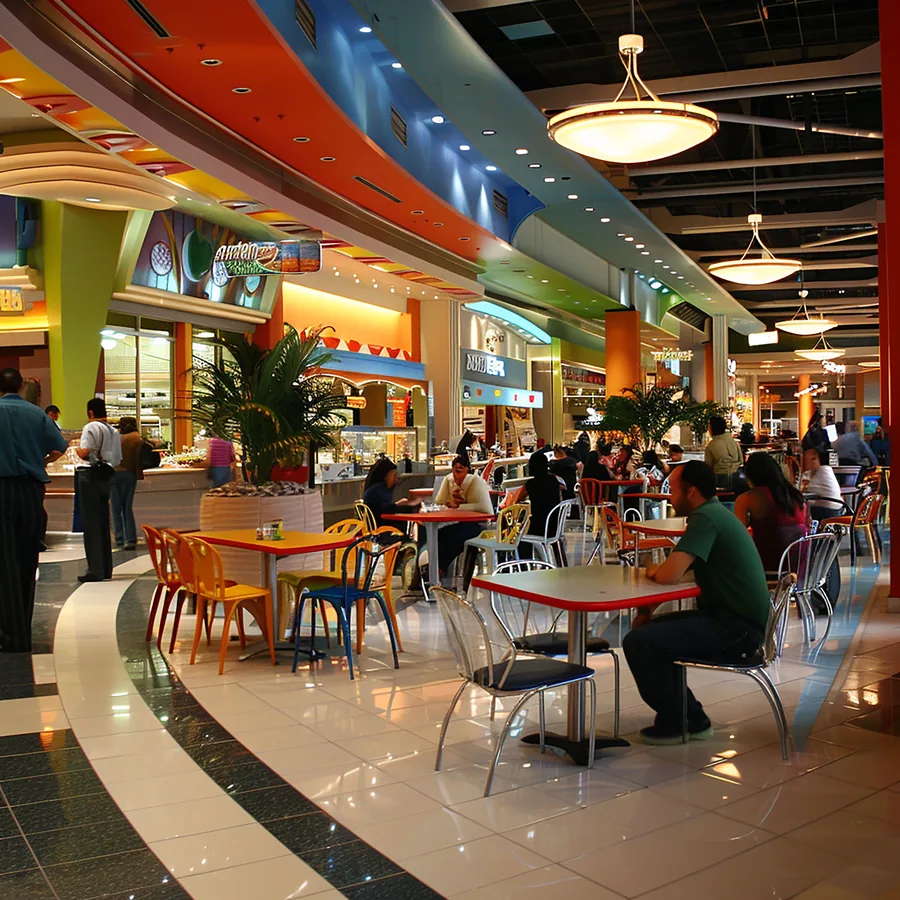
1-location, 6-vendor mall food court improved customer satisfaction from 6.2 to 8.7 and cut wait times from 18 to 11 minutes.

2-location, 16-vendor food court network improved peak hour throughput by 38% and reduced operational costs by ₹4.8L annually.
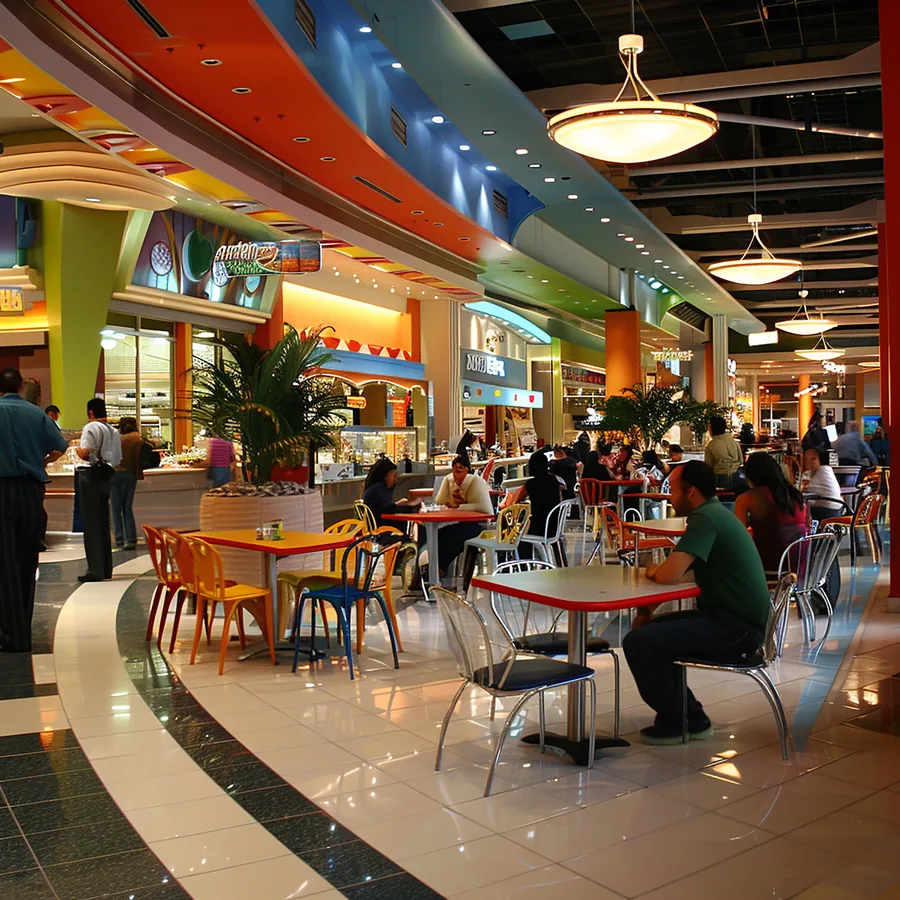
5-location, 42-vendor enterprise network improved net margin from 4.2% to 8.6% and eliminated ₹4.8 Cr duplicate costs.


